 Godwin Obaje
Dale Earnhardt Jr. Brushes Off Lamar Jackson Trademark Dispute
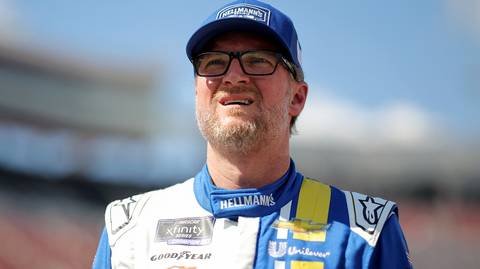
NASCAR legend Dale Earnhardt Jr. has downplayed a trademark dispute with Baltimore Ravens quarterback Lamar Jackson, saying he never intended to use the contested branding anyway.
The issue arose when Earnhardt’s team filed to trademark a JR Motorsports styling of the No. 8 used on merchandise. Jackson, who wears the number 8 jersey for the Ravens, contested the trademark application, citing potential confusion and brand dilution.
However, Earnhardt Jr. revealed on his podcast, “Dale Jr. Download,” that he had only filed for the trademark as a “back-up plan” to his iconic Budweiser No. 8 branding. He emphasized that he never planned to use the JR Motorsports No. 8 styling again.
“I learned on social media about the same time as everybody else did that Lamar was contesting our trademark application,” Earnhardt said. “He wasn’t suing me. He’s just contesting it.”
Earnhardt explained that upon learning about Jackson’s contest, he decided to drop the trademark filing altogether. “When I learned about it, I thought for sure it was over the Bud 8,” he said. “But when I dug into it, I learned that it was that JR Motorsports font. And we weren’t ever gonna use that again. Ever.”
As a result, Earnhardt described the situation as a “non-issue.” “So yeah, it’s not an issue. It’s a non-issue,” he said. “Much ado about nothing.”
Earnhardt’s decision to abandon the trademark filing seems to have been motivated by a desire to avoid a costly and unnecessary legal battle with Jackson. “I was not gonna argue with Lamar over something that I did not plan on using,” he said. “I wasn’t gonna spend thousands of dollars with my lawyers to fight for something that I didn’t need.”
The NASCAR star also expressed his respect for Jackson’s position, stating that he didn’t want the situation to escalate into a nasty dispute. “I don’t know Lamar’s team or him. Never met the guy,” he added. “I didn’t wanna see this get nasty for no reason.”
Conclusion
The swift resolution of this trademark dispute highlights Earnhardt’s pragmatic approach to business and his willingness to prioritize sportsmanship over potential profits. By dropping the trademark filing, Earnhardt has avoided a potentially lengthy and expensive legal battle with Jackson.
Ultimately, the outcome of this dispute serves as a reminder that, in the world of sports and branding, sometimes it’s better to know when to walk away. Earnhardt’s decision to abandon the trademark filing has allowed both parties to avoid further conflict, and the matter appears to be closed.

 Godwin Obaje