 Godwin Obaje
Led Zeppelin Return After 27 Years – A Reunion That Shook the World
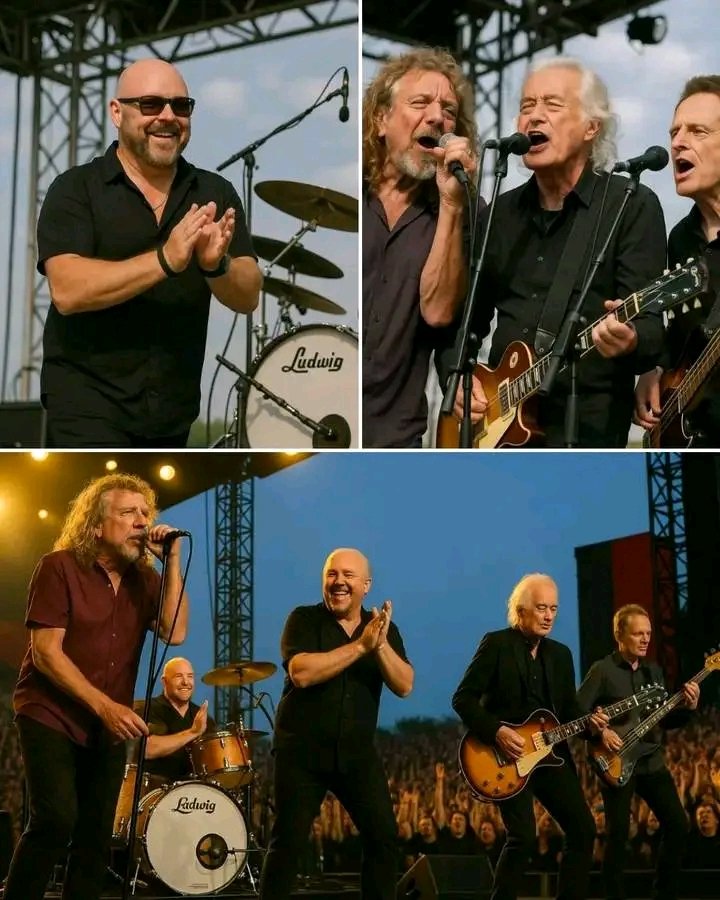
In a moment destined to be etched into the annals of rock history, Led Zeppelin returned to the stage after 27 long years—and it was nothing short of seismic. Robert Plant, Jimmy Page, and John Paul Jones reunited in a performance that was not about nostalgia but resurrection. This was rock music reborn in its purest, most elemental form.
As the first thunderous notes of “Kashmir” rang out, it was clear that this wasn’t just a reunion—it was a statement. The air crackled with anticipation. Fans didn’t merely cheer—they wept, screamed, and stood in awe, witnessing what many thought they would never see again. When Jason Bonham, son of the late John Bonham, took his place behind the drums, the crowd erupted in a roar that echoed decades of reverence.
This wasn’t an act of replacing a legend—it was a son honouring a legacy. With every cymbal crash and rhythmic surge, Jason summoned the essence of his father. It was a poignant and powerful bridge between past and present. The crowd didn’t hesitate—they embraced him, fully and ferociously, as part of the Zeppelin lineage.
But what truly elevated the night beyond spectacle was the unmistakable chemistry between the founding trio. The glances between Plant and Page, the nods to Jones, the unspoken language of shared history—these moments told a story deeper than any lyric could. It was not just music; it was memory and myth made manifest.
Plant’s voice, matured and textured with time, carried wisdom and emotional gravity. Page’s guitar work remained incendiary—each riff crackling with danger and magic. Jones, the band’s quiet architect, grounded the performance with elegance and precision. Their bond had not eroded with time; it had deepened.
The setlist read like a pilgrimage through the sacred texts of rock: “Whole Lotta Love,” “Black Dog,” “No Quarter,” “Stairway to Heaven.” Each song wasn’t a museum piece—it was alive, visceral, and pulsating with energy. The multi-generational crowd responded with unrelenting passion, proving that the power of Led Zeppelin transcends time.
This performance also brought renewed attention to the dynamic between Plant and Jones. While Plant and Page often shared the spotlight post-Zeppelin, Jones had remained a more reserved presence, pursuing a respected solo and production career. His exclusion from the 1990s Page and Plant tour was a sore point—one he once joked about on stage after learning of the reunion “from the newspapers.” Yet at the O2 reunion in 2007, fences were mended, and Plant later publicly acknowledged Jones’s brilliance.
That mutual respect was palpable on stage. The performance was not just a nod to what was—it was a reaffirmation of what still is.
Led Zeppelin didn’t reunite to relive their glory days. They returned to remind the world why they were untouchable to begin with. This wasn’t just a concert. It was a declaration: rock and roll, in its purest form, is still alive. And its gods have returned—not to whisper, but to roar.

 Godwin Obaje
 admin
admin